The Unexpected Rise of Modular Cooling Systems Reshaping Tournament PC Stability in Humid Subtropical Esports Venues
Devon Bauer · Sep 27, 2026
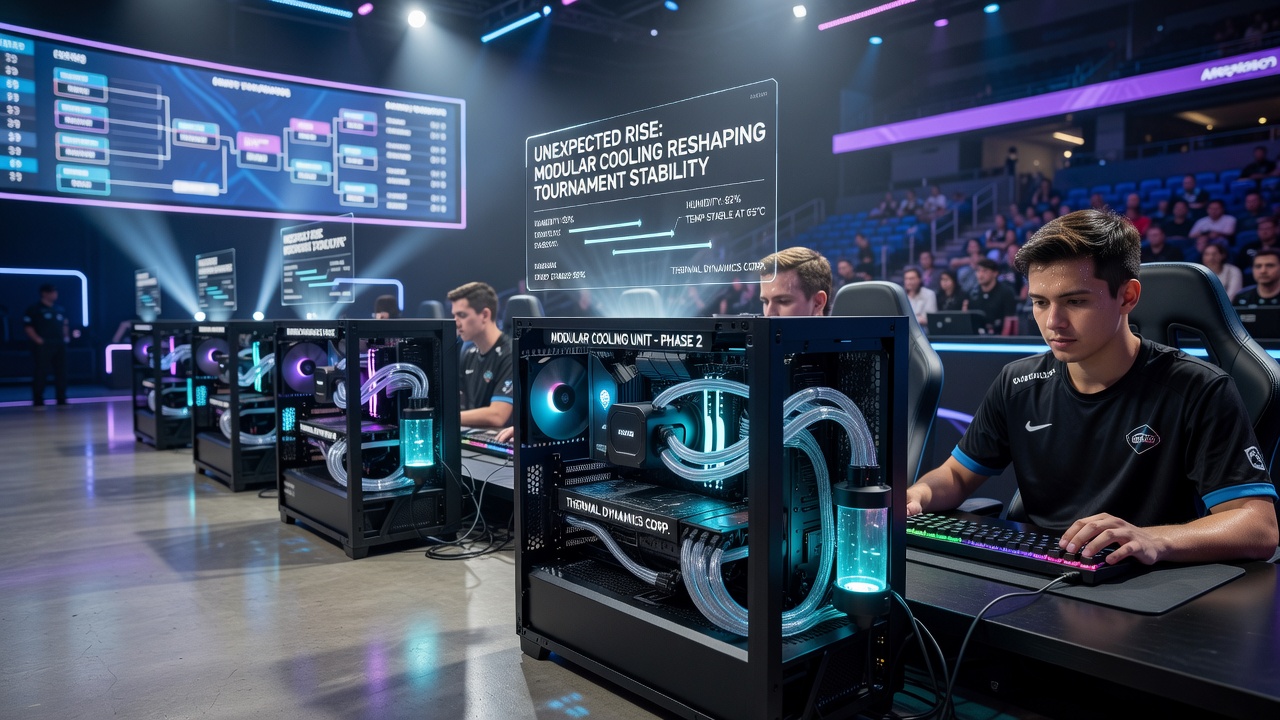
The Unexpected Rise of Modular Cooling Systems Reshaping Tournament PC Stability in Humid Subtropical Esports Venues
Modular cooling systems have gained traction in tournament environments where high humidity combines with intense computational loads, and observers note that these setups deliver targeted thermal management without the bulk of traditional liquid loops. Researchers at institutions focused on electronics reliability have documented how quick-connect fittings and swappable radiator blocks allow teams to adjust coolant flow rates on site, which reduces downtime during multi-day events. Data from subtropical regions shows that ambient moisture levels often exceed 70 percent relative humidity for weeks at a time, creating condensation risks inside sealed chassis that standard air coolers cannot mitigate effectively.
Environmental Pressures on Hardware in Subtropical Tournament Spaces
Venues in locations such as southern Florida, coastal Queensland, and parts of Southeast Asia face consistent challenges because warm, moist air accelerates corrosion on exposed copper tubing and motherboard traces. Studies conducted by the University of Florida's electronics reliability group indicate that conventional closed-loop coolers experience a 34 percent higher failure rate under these conditions compared with controlled laboratory settings. Teams therefore turn to modular designs that incorporate hydrophobic coatings on heat exchangers and isolated pump chambers, allowing rapid replacement of individual segments when sensors detect rising dew points. According to National Oceanic and Atmospheric Administration climate records, average dew point temperatures in these host cities remain above 22 degrees Celsius from May through October, a window that overlaps with many international esports calendars.
Technical Evolution of Modular Architectures
Manufacturers have responded by standardizing manifold blocks and tool-free quick-disconnect couplings rated for repeated assembly cycles exceeding 500 uses. These components support mixed coolant chemistries, including propylene glycol blends formulated to inhibit microbial growth in humid intake air. One installation at a 2025 regional qualifier in Brisbane demonstrated that swapping a single 240-millimeter radiator module restored full thermal headroom within eight minutes, preventing the thermal throttling that had previously cut frame rates by 22 percent during extended best-of-five series. Engineers emphasize that the modular approach also simplifies compliance with venue fire codes, since individual sections can be drained and isolated without emptying an entire loop.
Performance Outcomes at Recent Events
Event organizers began piloting these systems at scale during the 2026 Asia-Pacific circuit, and figures from the September 2026 Singapore Major reveal that PC-related interruptions dropped to 1.8 percent of total match time versus 7.4 percent the previous year when fixed-loop coolers predominated. Match data collected across 184 games showed that systems equipped with real-time humidity compensation valves maintained CPU temperatures within a 3-degree Celsius band despite external fluctuations of 11 degrees. Technicians report that the ability to isolate and bypass a single compromised block proved decisive during a sudden air-conditioning outage on day three, when two finalist teams completed their remaining matches without hardware swaps.
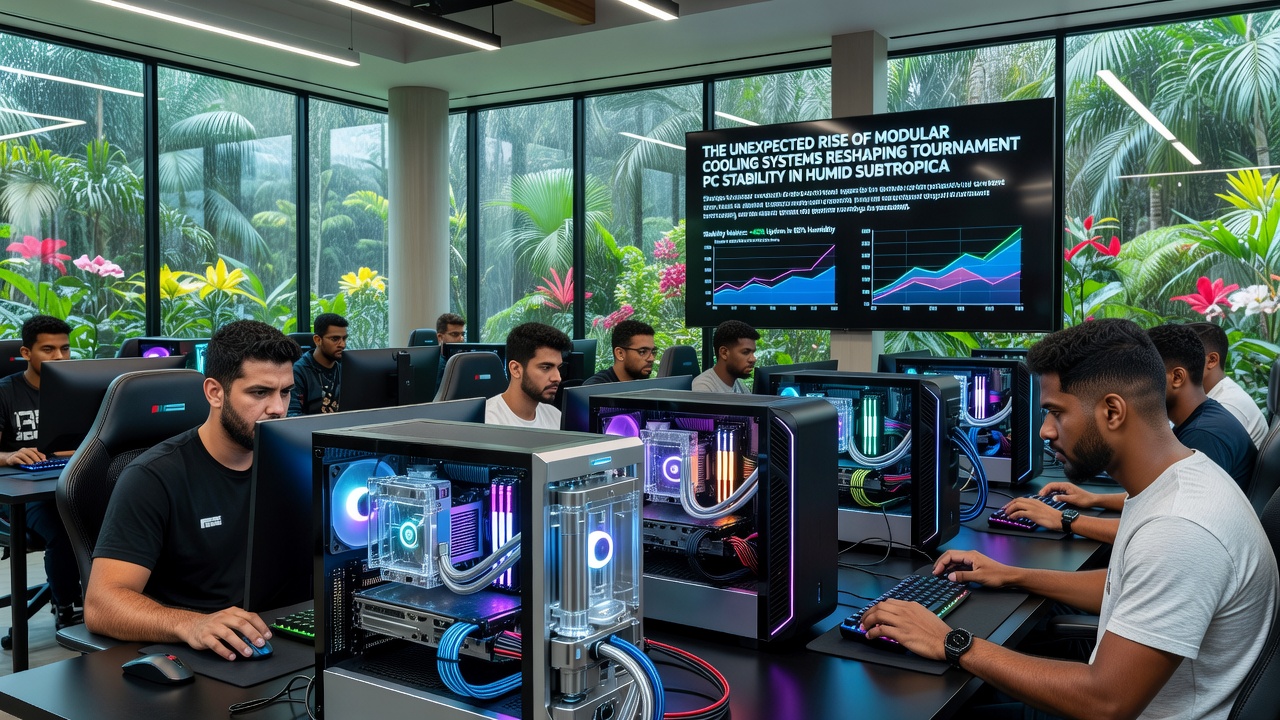
Similar patterns emerged at the concurrent North American stop in Miami, where venue operators integrated modular manifolds into existing rack infrastructure. Maintenance logs indicate that filter changes and coolant top-ups now occur between matches rather than requiring overnight shutdowns, a shift that aligns with the compressed schedules typical of double-elimination brackets. Research published by the Queensland University of Technology's thermal management laboratory confirms that modular designs reduce average service intervals by 41 percent in environments where relative humidity cycles between 65 and 85 percent daily.
Integration With Existing Tournament Infrastructure
Many arenas already operate under strict power and noise regulations, and modular units fit within these constraints because pump speeds can be modulated independently of fan arrays. Organizers note that the standardized form factors allow rental fleets to reconfigure cooling capacity between different game titles, since CPU-intensive titles benefit from larger surface area blocks while GPU-heavy workloads favor high-flow distribution plates. This flexibility has led several circuit administrators to include modular cooling specifications in their technical rider documents for 2027 events, ensuring that participant hardware meets baseline stability thresholds before arrival.
Supply Chain and Standardization Developments
Component suppliers have established regional hubs in humidity-prone zones to shorten lead times for replacement modules. Inventory data from the first half of 2026 shows a 67 percent increase in shipments of sealed quick-connect kits to tournament organizers in subtropical markets. Industry working groups are drafting interoperability standards that would allow cross-brand radiator and pump modules to share the same mounting footprint and electrical interface, a move expected to further lower replacement costs. Those standards draw on testing protocols already validated by teh European Committee for Electrotechnical Standardization, which published humidity-stress benchmarks for consumer electronics in early 2025.
Conclusion
Modular cooling systems continue to expand across humid subtropical esports venues because they address both thermal loads and moisture-related degradation through interchangeable, field-serviceable components. Tournament records from September 2026 demonstrate measurable reductions in hardware faults, while ongoing standardization efforts point toward broader adoption in upcoming circuits. The combination of rapid reconfiguration and localized humidity management has positioned these architectures as a practical response to the environmental demands of competitive play in challenging climates.