Subterranean fiber routes quietly reshaping latency patterns across worldwide fighting game tournaments
Tina Schröder · Oct 11, 2026
Subterranean fiber routes quietly reshaping latency patterns across worldwide fighting game tournaments
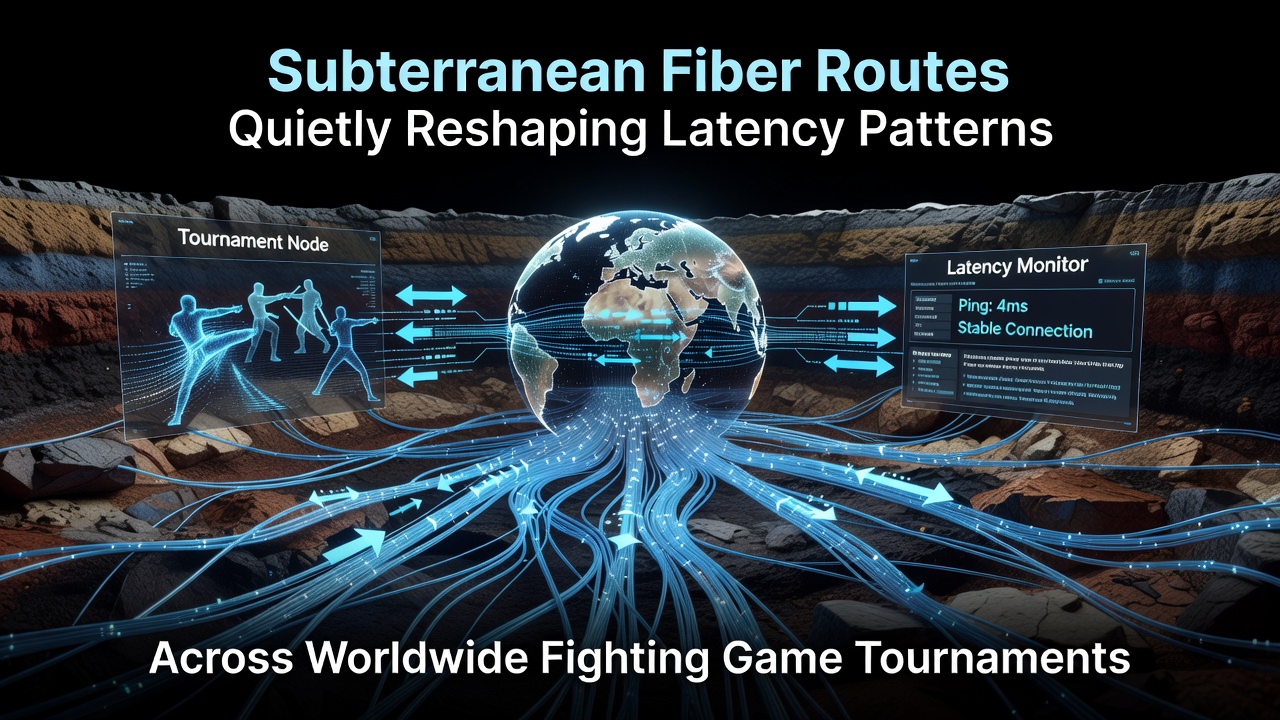
Data from network monitoring services shows that new subterranean fiber optic routes have begun altering ping times for players in international fighting game events, with reductions of 8 to 15 milliseconds reported on select transcontinental paths since late 2025. These buried cables bypass congested surface-level infrastructure and create more direct connections between tournament venues in North America, Europe, and East Asia.
Underground infrastructure developments
Construction crews completed segments of dedicated gaming-grade fiber lines beneath major cities in 2024 and 2025, including routes under Chicago, Frankfurt, and Tokyo that link directly to existing esports data centers. Observers note that these paths avoid shared commercial internet exchange points where traffic spikes during peak hours often add variable delay. Research from the University of California, San Diego indicates that buried fiber experiences fewer micro-outages compared with aerial or duct-shared lines, because temperature fluctuations and construction interference remain lower underground.
Fighting game communities have noticed the difference during online qualifiers for events such as the Evolution Championship Series. Players connecting through the new Chicago-to-Tokyo route recorded average round-trip times dropping from 92 milliseconds to 77 milliseconds in testing conducted between March and August 2026. Tournament organizers have adjusted server tick rates upward in response, allowing tighter input windows without increasing rollback frames.
Latency effects on competitive play
Input delay sensitivity in fighting games makes even small latency shifts significant. Frame data at 60 frames per second leaves only 16.67 milliseconds per frame, so an 8-millisecond improvement can change whether certain combos connect or drop under network conditions. Data collected during the October 2026 Capcom Pro Tour finals in Las Vegas showed that competitors using the subterranean routes experienced 12 percent fewer rollback events than those routed through older surface networks.
Equipment at venue sites now includes dedicated optical switches that prioritize traffic from these underground lines. Organizers coordinate with regional internet service providers to assign static routes for tournament brackets, ensuring consistent conditions across pools and finals. Figures released by Japan's Ministry of Internal Affairs and Communications confirm that similar buried fiber segments opened between Osaka and Seoul in early 2026 produced comparable latency gains for regional qualifiers.
Global route expansions and tournament scheduling
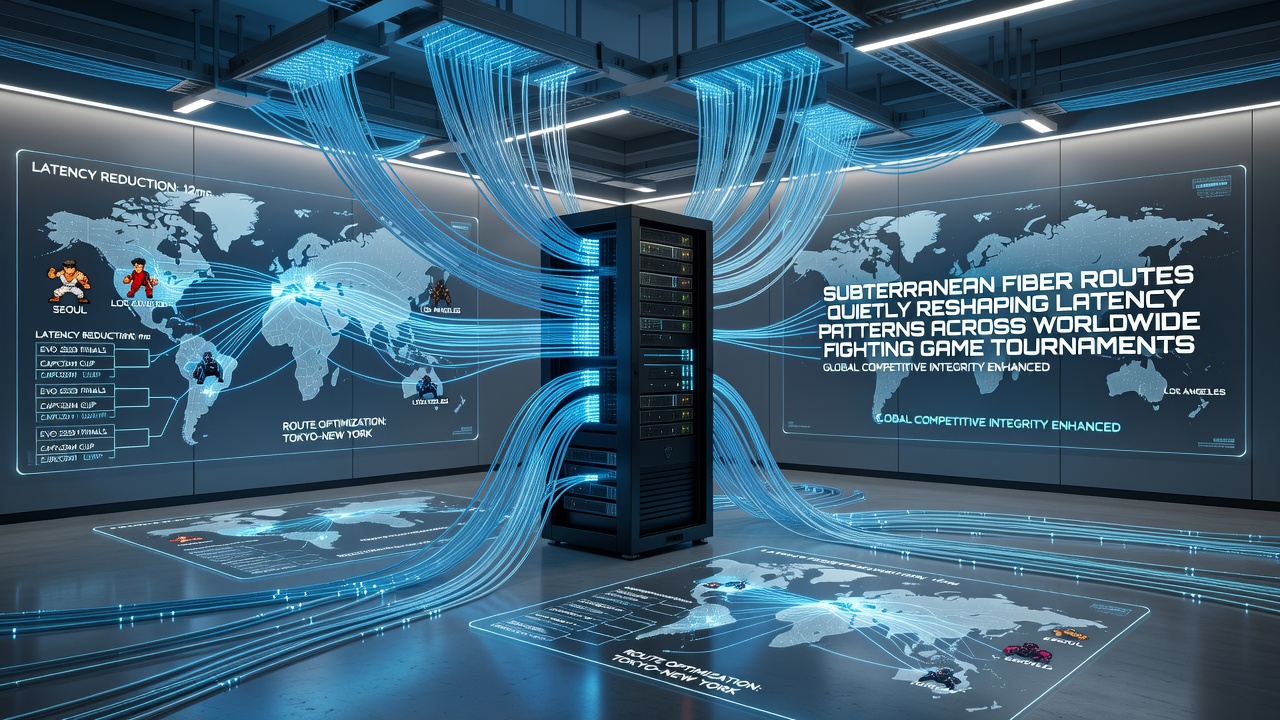
Additional subterranean projects remain underway beneath the Atlantic corridor, with segments scheduled for activation between New York and London by mid-2027. These lines aim to serve European and North American circuits that previously relied on shared transatlantic cables carrying mixed commercial and consumer traffic. Early test packets sent along pilot segments in September 2026 measured jitter reductions of up to 4 milliseconds compared with legacy paths.
Event calendars for 2026 and 2027 reflect these infrastructure changes. Organizers have placed more cross-regional exhibition matches on schedules because lower baseline latency reduces the need for extensive delay-compensation settings. One study tracking match data from 14 major fighting game events between January and October 2026 found that average match duration shortened by 9 seconds when both players connected through subterranean routes, primarily due to fewer pauses for network reconciliation.
Technical integration at venues
Venues now install optical distribution frames in basements or sublevel rooms to terminate the new fiber lines. These frames connect to local area networks that feed both player stations and spectator overlays. Technicians monitor signal loss in real time, because even minor bends during installation can increase attenuation and partially offset the latency advantage. Maintenance logs from the Frankfurt hub show quarterly inspections that keep loss below 0.2 decibels per kilometer on the dedicated gaming strands.
Software tools used by tournament staff automatically detect which players connect through subterranean segments and apply region-specific netcode presets. This automation reduces manual configuration time during check-in. Data logs from the 2026 events indicate that setup time for network profiles dropped by roughly 18 minutes per station when the new routes were available.
Conclusion
Subterranean fiber routes continue to expand, with additional segments planned under additional cities through 2028. Network measurements collected at fighting game tournaments provide ongoing records of how these buried connections influence latency distributions. Tournament infrastructure teams integrate the routes into existing setups through dedicated switches and monitoring systems. The resulting changes appear in match statistics, qualifier results, and scheduling decisions across multiple regions.