Silent Fan Arrays Reshaping Nighttime PC Gaming Marathons in Shared Urban Apartments
Petra Carter · Nov 8, 2026
Silent Fan Arrays Reshaping Nighttime PC Gaming Marathons in Shared Urban Apartments
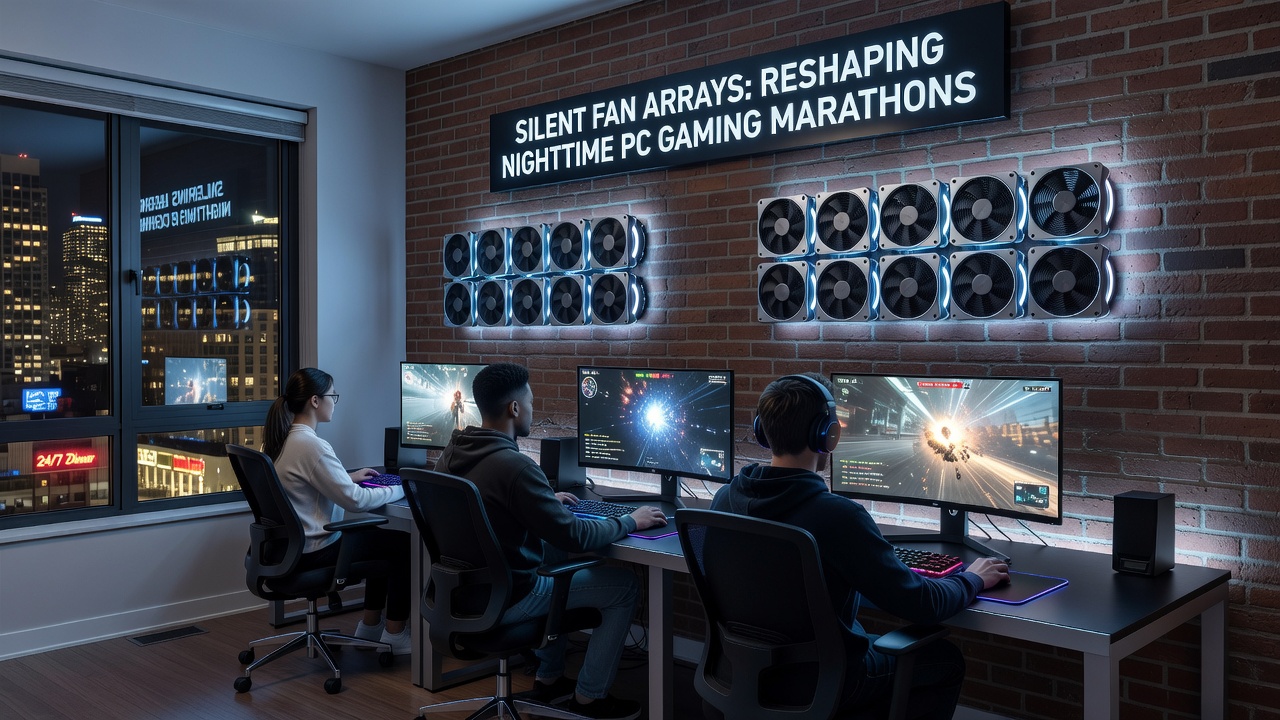
Urban dwellers in high-density apartment buildings have increasingly turned to silent fan arrays to maintain extended PC gaming sessions after dark without generating disruptive sound levels that travel through thin walls and shared ventilation systems. These cooling solutions combine multiple low-RPM fans with specialized blade geometries and vibration-isolating mounts, and they have appeared in more gaming rigs as component manufacturers refined designs through 2026. Data from hardware shipment reports indicate that units featuring noise outputs below 20 decibels now represent a growing share of aftermarket cooling sales in cities across North America, Europe, and East Asia.
Core Technology Driving Reduced Acoustic Output
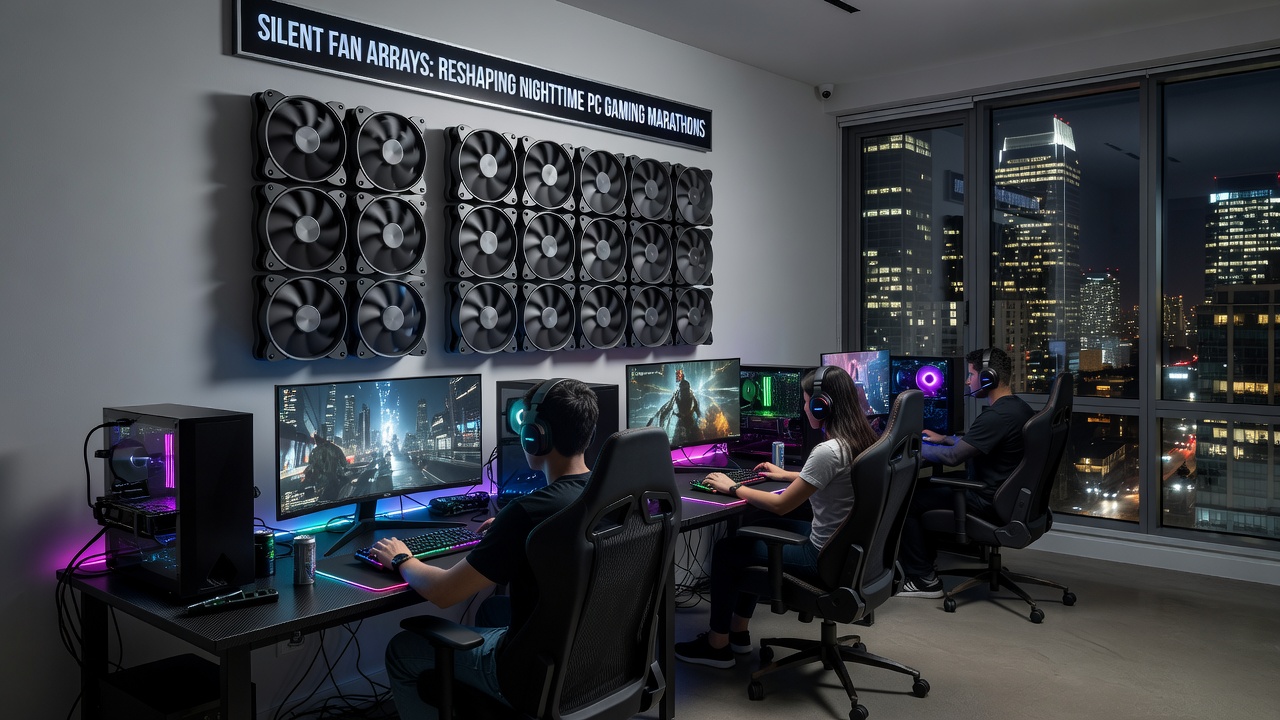
Engineers achieve lower noise profiles by pairing dense arrays of 120mm and 140mm fans that operate at reduced speeds while maintaining adequate airflow through optimized fin stacks and liquid cooling loops. Research from the University of Tokyo's acoustics laboratory demonstrates that staggered blade angles and magnetic levitation bearings cut tonal peaks by up to 12 decibels compared with conventional single-fan setups. Manufacturers incorporate rubber gaskets and decoupled frames that prevent vibration transfer to case panels, a detail that proves critical in buildings where floor resonance amplifies low-frequency hums into neighboring units.
November 2026 brought wider availability of firmware-controlled arrays that adjust individual fan curves based on real-time temperature sensors and ambient noise readings from onboard microphones. Observers note that these adaptive systems allow sustained operation during peak evening hours when external city noise drops and internal building acoustics become more noticeable to roommates or adjacent tenants.
Patterns of Adoption in Dense Residential Settings
Shared apartments in cities such as Toronto, Berlin, and Seoul show measurable uptake, with local electronics retailers reporting doubled inventory turnover for silent cooling kits between 2024 and 2026. Residents often install these arrays after receiving noise complaints or after installing sound level apps that track overnight emissions. Government noise guidelines from the Australian Department of Climate Change, Energy, the Environment and Water establish recommended nighttime limits around 35 decibels inside dwellings, and similar thresholds appear in municipal codes throughout the European Union, prompting gamers to seek hardware that stays well below those marks.
One documented installation in a Montreal high-rise combined a three-fan array with acoustic foam lining inside a mini-ITX case, resulting in measured output of 18 decibels at one meter during full-load rendering tests. Such configurations enable sessions lasting past midnight while preserving the quiet environment required for early-morning work schedules common among urban professionals.
Integration With Existing Hardware Ecosystems
Modern motherboards and power supply units now include dedicated headers and software suites that coordinate multiple fan zones, allowing arrays to function alongside AIO liquid coolers without manual intervention. Trade data compiled by the Japan Electronics and Information Technology Industries Association shows that shipments of motherboards supporting at least six PWM fan channels rose steadily through late 2025, aligning with demand for finer acoustic control. Gamers frequently pair these boards with aftermarket controllers that log performance metrics over time, revealing consistent temperature stability even when fans remain below audible thresholds.
Case examples from shared living arrangements illustrate how users retrofit older cases with new fan grilles and dampening pads, extending the usability of compact builds that previously struggled with heat buildup during prolonged loads. The approach avoids the need for larger chassis that consume valuable floor space in studio apartments.
Measured Outcomes in Community Settings
Surveys conducted by university research groups in the United Kingdom and Canada record fewer neighbor disputes related to nighttime computing activity after residents adopt low-noise cooling. Participants report average session lengths increasing by two to three hours without external interruptions, while maintaining CPU and GPU temperatures within manufacturer specifications. Acoustic mapping studies further confirm that sound pressure levels drop sufficiently to meet or exceed local residential ordinances in multi-unit structures.
Retail analytics indicate that bundled kits containing fans, mounts, and control software now account for a larger portion of cooling category revenue, reflecting demand from users who game in environments where space and noise constraints intersect.
Conclusion
Silent fan arrays have become a practical component in urban PC gaming setups that operate during nighttime hours, supported by advances in blade design, mounting hardware, and control firmware documented through 2026. Adoption continues in cities where shared walls and municipal noise standards create clear operational requirements, and ongoing refinements in sensor integration point toward further reductions in audible output across future product cycles.